Casey Simmons · 6 October 2026
Community-Led Monitoring Programs Reveal Fog-Driven Shifts in Woodland Soil Composition and Insect Activity
Community-led monitoring programs have expanded across fog-influenced woodlands in multiple regions since 2023, and data collected through October 2026 shows measurable changes in soil chemistry alongside altered insect behavior patterns. These initiatives rely on local volunteers who collect samples on fixed schedules, record environmental variables, and submit results to centralized databases for analysis by research teams.
Program Structure and Data Collection Methods
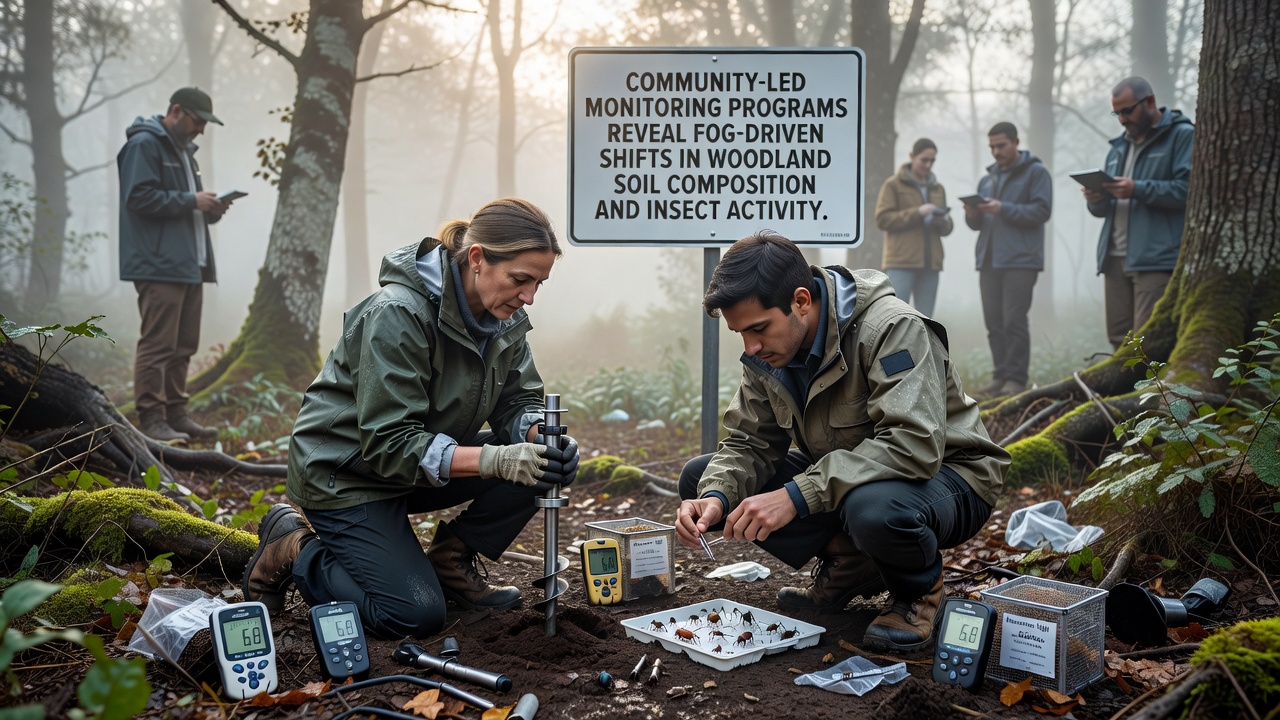
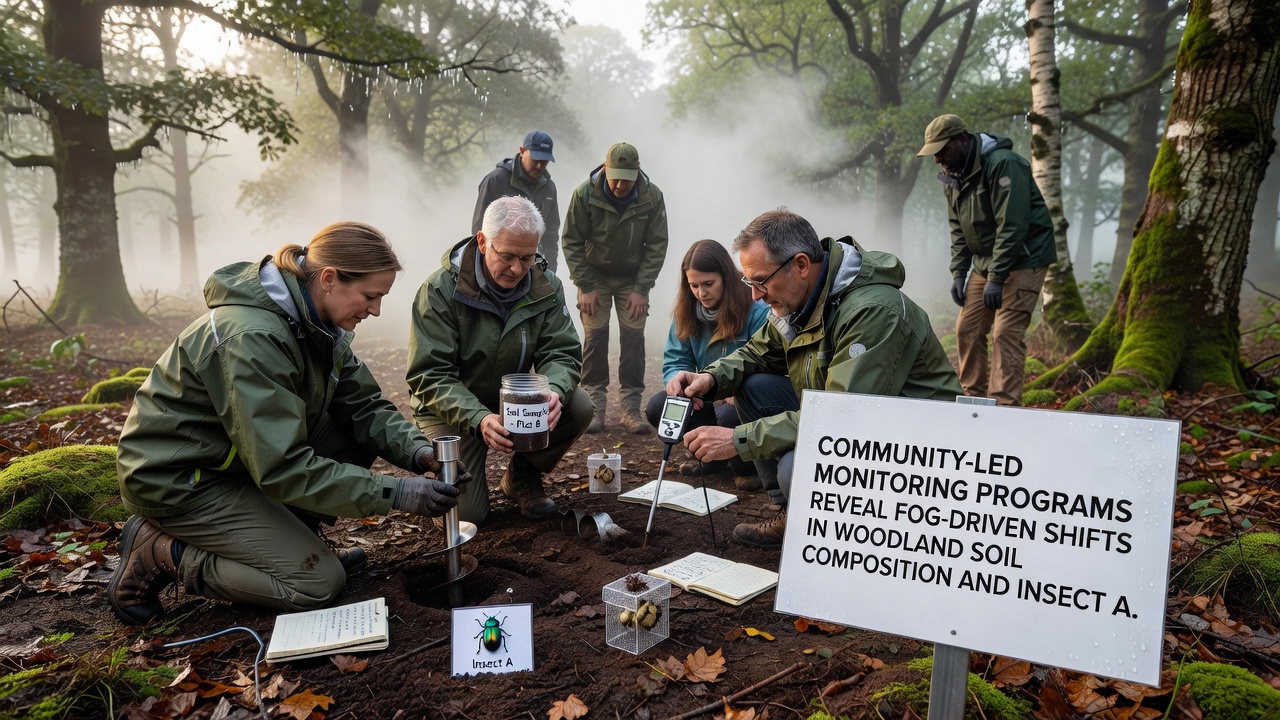
Volunteers follow standardized protocols that include soil core extraction at 10-centimeter depths, pH testing with portable meters, and pitfall trap deployment for insect capture. Teams operate in designated plots where fog frequency is tracked via automated sensors, while manual observations note leaf wetness duration and ground moisture levels. Coordination occurs through regional networks that share calibration standards, and results feed into open repositories maintained by academic institutions.
Training sessions cover equipment handling and species identification, with cross-checks performed by professional ecologists to maintain consistency across sites. In one documented workflow, participants log findings weekly during peak fog seasons and monthly during drier intervals, creating time-series datasets that span multiple years.
Observed Changes in Soil Composition
Soil analyses from monitored woodlands indicate rising acidity in upper layers at several sites where fog events have increased in duration. Measurements show pH drops averaging 0.3 units between 2024 and 2026, accompanied by elevated aluminum concentrations and reduced calcium availability. Organic matter decomposition rates appear slower in plots with prolonged fog cover, leading to thicker litter layers that retain more moisture.
Nutrient leaching patterns have shifted as well, with nitrogen compounds moving deeper into profiles during extended fog periods. Researchers note that these alterations coincide with changes in microbial activity counts, though direct causation remains under further study through controlled comparisons.
Insect Activity Patterns and Responses
Insect sampling reveals adjustments in foraging timing and species abundance tied to fog density fluctuations. Certain beetle and fly populations demonstrate increased nocturnal activity on nights following dense fog, while daytime captures decline in the same intervals. Trap data from October 2026 collections indicate higher numbers of moisture-dependent larvae in soil samples from fog-prone zones compared with adjacent clearer areas.
Butterfly and moth records show modified emergence schedules, with some species appearing earlier in the season at sites experiencing more frequent fog. Ground-dwelling arthropod diversity metrics have varied, with certain ant colonies relocating nest entrances in response to altered surface humidity. These observations align with broader datasets compiled by the US Forest Service on microclimate effects in similar habitats.
Integration of Community Data with Institutional Research
Central analysis combines volunteer-submitted records with satellite-derived fog maps and weather station outputs. Statistical models developed by university teams identify correlations between fog duration metrics and the measured soil and insect variables. Cross-validation occurs through repeated sampling at overlapping sites, reducing potential observer bias.
One dataset from a multi-year project in Central European woodlands demonstrates that plots with above-average fog hours exhibit 15 percent higher soil organic carbon retention alongside shifts in collembola abundance. Parallel findings from North American programs tracked by Environment and Climate Change Canada confirm similar directional changes in comparable forest types.
Broader Context from Related Monitoring Efforts
Community programs operate alongside established ecological surveys, providing finer spatial resolution in remote woodland patches. Data sharing agreements allow integration with national biodiversity inventories, and findings contribute to models that project future habitat conditions under varying fog regimes. October 2026 updates incorporated new sensor deployments that capture real-time humidity gradients at ground level.
These combined records highlight consistent patterns across geographically separated woodlands, though local topography and vegetation composition introduce variations in the magnitude of recorded shifts.
Conclusion
Community-led monitoring continues to supply detailed, site-specific information on fog-related dynamics in woodland systems. Soil composition metrics and insect activity records through October 2026 document measurable adjustments that align with fog frequency observations. Ongoing data collection supports further examination of these relationships through expanded networks and refined analytical methods.