Casey Simmons · 31 August 2026
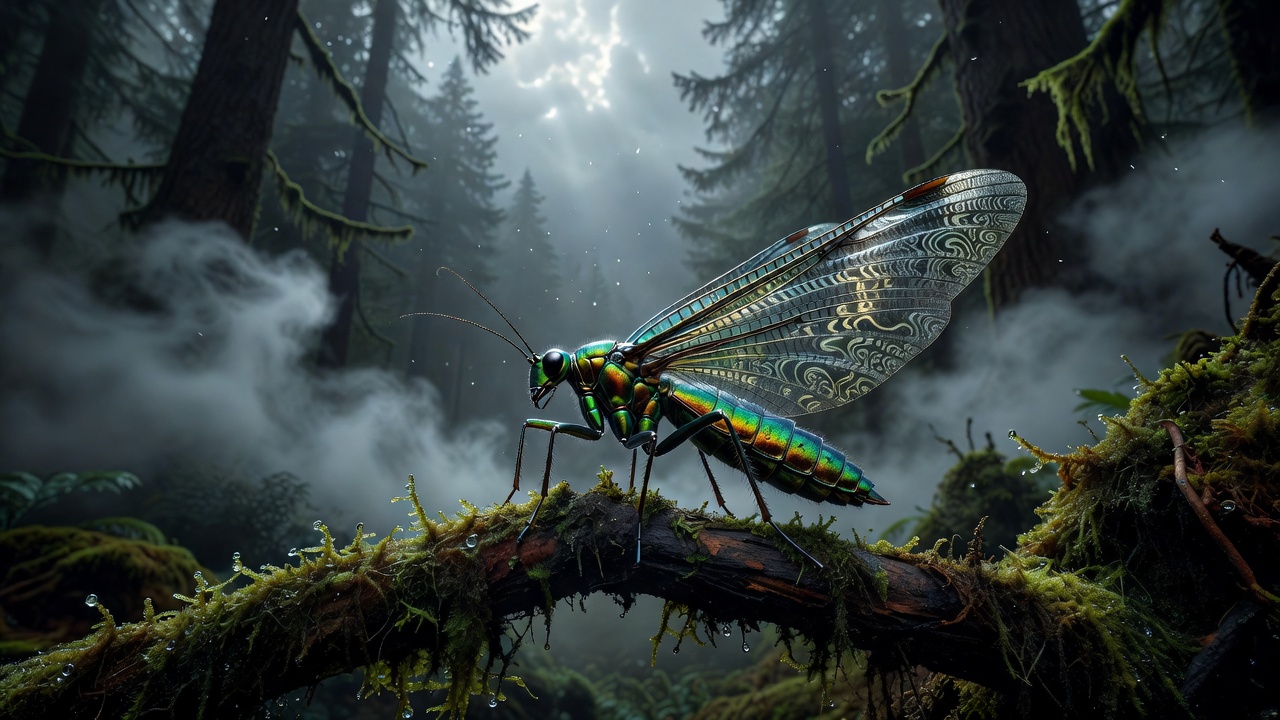
Explorers in the Nebelwald misty forests have uncovered a new insect species thriving in the canopy. The beetle was found at heights exceeding 30 meters above the ground. Researchers used advanced climbing equipment and mist nets to capture samples without disturbing the habitat. Local communities have expressed interest in the discovery as it could boost eco-tourism while promoting awareness about forest preservation. Educational programs are being developed to teach about the importance of canopy insects.
Physical Features and Behavior
The insect displays a metallic green exoskeleton that reflects light in the dim canopy conditions. It has elongated legs suited for navigating moss-covered branches. Observations indicate nocturnal activity patterns with feeding on sap and small insects. Its life cycle appears synchronized with seasonal fog patterns unique to the area. Multiple specimens showed variations in size depending on altitude. Further studies using DNA barcoding revealed it is distinct from similar species in lower elevations. This adaptation suggests evolutionary pressures from the misty environment have led to specialized traits for moisture retention and camouflage. The misty forests of Nebelwald provide a unique microclimate that supports such specialized life forms.
Role in Ecosystem and Future Research
The new species plays a potential role in pollination and decomposition processes within the canopy. Its presence indicates healthy forest conditions as it is sensitive to pollution and temperature changes. Conservationists are advocating for increased protection measures to safeguard such discoveries from habitat loss. Upcoming projects will focus on long-term monitoring using camera traps and environmental sensors. Collaboration with international entomologists is planned to classify the species formally. The find emphasizes the need for continued exploration of under-researched forest layers to document biodiversity before potential declines occur due to environmental shifts. Ongoing climate studies link fog frequency to insect survival rates.